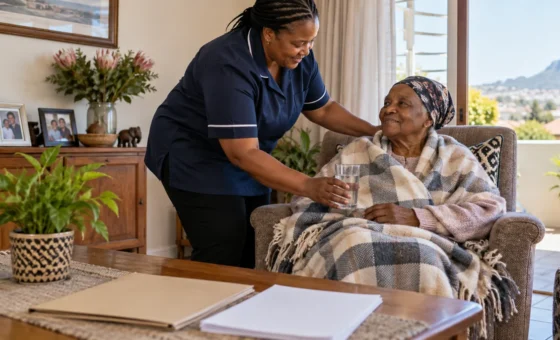
If an older person or a disability-grant recipient cannot look after themselves and needs full-time care, SASSA Grant-in-Aid may provide additional support alongside an existing social grant. The first step is to check whether the person already receives one of the qualifying grants and whether their care situation fits the official rules.
Preparation matters because the official process asks for a medical or assessment report that is less than three months old. Gathering this report and the required identity and marital-status documents before visiting a SASSA office can help the applicant or their representative arrive prepared.
On this page
You stay on this website. No payment required.
Who can be considered for Grant-in-Aid?
The government says the person must already receive a disability grant, a war veteran’s grant or a grant for older persons. They must also be unable to look after themselves because of a physical or mental disability and need full-time care from someone else.
The official eligibility information also says the person must not be cared for in an institution that receives a government subsidy for their care or housing. If this point is unclear for the person’s living arrangement, ask the nearest SASSA office before relying on this guide.
What to prepare before the office visit
Bring the person’s 13-digit bar-coded ID and, where applicable, proof of marital status and the spouse’s identity. The medical or assessment report should show that full-time care is needed and must be recent enough to meet the official requirement.
- Existing grant Confirm that the person receives a disability, war veteran’s or older persons grant.
- Care assessment Obtain a report less than three months old showing the need for full-time care.
- Personal documents Pack the ID and any applicable marital-status and spouse-identity proof.
When the applicant cannot travel
A family member or friend can apply on the person’s behalf when the person is too old or sick to travel to the office. The representative should take a letter from the applicant and/or a doctor’s note explaining why the applicant cannot visit.
Use the detailed checklist before travelling. It explains what happens at the office, what to keep after applying and what to do if an application is unsuccessful.
Frequently asked questions
Can someone apply for Grant-in-Aid without another grant?
The government lists an existing disability grant, war veteran’s grant or grant for older persons as a requirement. Check the person’s current grant before preparing an application.
How recent must the medical assessment be?
The official page asks for a medical or assessment report that is less than three months old and shows that full-time care is needed.
Can a relative apply if the person is too ill to travel?
Yes. The official page says a family member or friend can apply on the person’s behalf if they take a letter from the applicant and/or a doctor’s note explaining why the applicant cannot visit the office.