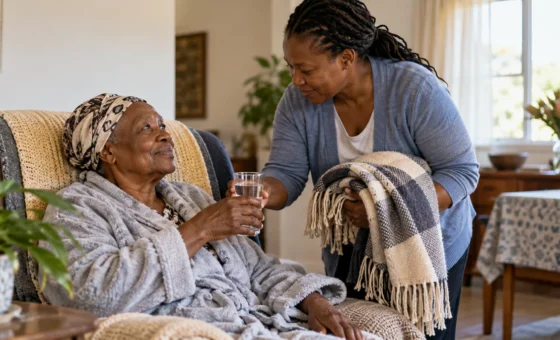
SASSA Grant-in-Aid is an additional grant for a person who is already receiving a qualifying social grant and cannot look after themselves. This guide helps you prepare for an office application when the person needs full-time care from someone else.
Before travelling, confirm that the person receives a disability grant, war veteran’s grant or grant for older persons. The official rules also require that the person needs full-time care because they cannot look after themselves owing to a physical or mental disability.
On this page
The application should be made at the SASSA office nearest to where the person lives. Bring the person’s 13-digit bar-coded identity document, plus proof of marital status and the spouse’s identity where those documents apply.
A medical report or assessment report is a key document. It must be less than three months old and show that the person needs full-time care, so check the report date before you go to the office.
At the office, the application form is completed in the presence of a SASSA officer. The officer interviews the applicant and tells them whether they qualify; after applying, keep the receipt as proof that the application was submitted.
You will leave for an external site. Official portal. Free access.
Check eligibility before preparing documents
The person must not be cared for in an institution that receives a government subsidy for their care or housing. This condition is separate from the existing-grant and full-time-care requirements, so consider it before making the trip to the office.
Follow these steps at the SASSA office
- Confirm the current grant Check that the person already receives a disability, war veteran’s or older persons grant.
- Get a recent report Take a medical or assessment report less than three months old that shows the need for full-time care.
- Pack supporting documents Bring the 13-digit bar-coded ID and, where applicable, marital-status proof and the spouse’s identity.
- Visit the nearest office Go to the SASSA office nearest to where the person lives with the documents.
- Complete the form correctly Complete the application form in the presence of the SASSA officer; the beneficiary or a SASSA official may complete it.
- Keep the receipt Keep the receipt given after the application as proof that you applied.
If the person cannot visit the office
If the person is too old or sick to travel, a family member or friend can apply on their behalf. The representative should take a letter from the applicant and/or a doctor’s note saying why the applicant cannot visit the office.
After you submit the application
The government says processing may take up to three months. If the grant is approved, payment is made from the date on which the person applied, according to the official information.
If the application is not approved, SASSA says it will explain the reason in writing. A person who disagrees with the decision may appeal to the Minister of Social Development within 90 days of being notified that the application was unsuccessful.
Keep copies of the documents you took to the office and the receipt you received. These records can help you refer back to the application details if you need to follow up or consider an appeal.
Frequently asked questions
Where do I apply for SASSA Grant-in-Aid?
Go to the SASSA office nearest to where the person lives. The official page says to take the required identity, marital-status and medical or assessment documents.
Who may complete the application form?
The official page says the form is completed in the presence of a SASSA officer and that only the beneficiary or a SASSA official may complete it.
How long can a Grant-in-Aid application take?
The government says it may take up to three months to process the application. If it is approved, the official page says payment is made from the date of application.
What can I do if the application is declined?
SASSA says it will inform the applicant in writing why the application was unsuccessful. If the person disagrees, they may appeal to the Minister of Social Development within 90 days of notification.