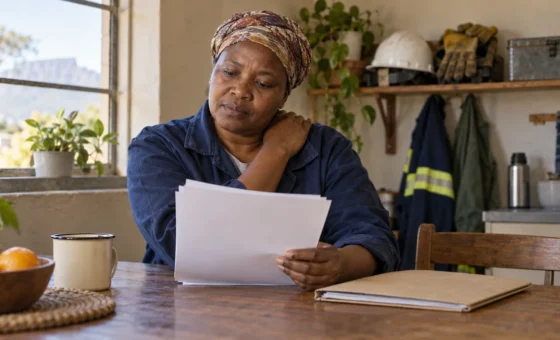
If an old workplace injury or occupational disease is affecting you again, begin by separating what you know from what you need to verify. A general guide cannot decide a claim, but it can help you collect the facts needed to use the official information more effectively.
The Department of Employment and Labour explains that the Compensation Fund provides compensation to employees injured or who contract diseases while on duty. Your first task is therefore to identify the work-related incident or condition accurately, rather than relying on a memory of a payment or conversation.
On this page
Find the earliest record you can: an incident report, employer communication, claim reference, medical note or treatment record. Record the employer name, workplace, approximate date and the names of people or offices you contacted. Missing paperwork does not prove that nothing was reported, but it tells you what to ask about.
If your health has changed, speak with your treating doctor about the current condition and any connection they can document. The official guidance says an injury that appeared not serious at the time can resurface later and may be reopened with the request of the treating doctor. This is why current medical information can matter when you are checking an older matter.
Also check whether the incident was reported. The Department says occupational injuries and diseases should be reported by the employer, and that an employee may report if the employer does not. Keep your questions focused: Was a report made, is there a reference, and what official next step applies to the information you have?
You will leave for an external site. Official portal. Free access.
Make a simple case timeline
Create one short timeline before you contact anyone. Include the incident or onset of disease, the first treatment, any report to the employer, any claim communication and the point at which complications reappeared. A clean timeline helps you explain the matter consistently and spot gaps that need clarification.
- Start with the event Note when and where the injury happened, or when the occupational disease was first identified.
- Add reporting Record who was told, when they were told and any reference number or written acknowledgement.
- Add treatment List relevant treatment dates and keep current information from your treating doctor.
- Add the recent change Describe when complications or symptoms resurfaced and what you now need clarified.
Prepare focused questions for the official route
Avoid asking only whether money is waiting. Ask whether there is a record of the reported injury or disease, whether the matter has a reference, and what information is needed to check a possible reopening. If the employer did not report the matter, say so plainly and ask how an employee can report it.
Keep the official guidance in context
The official page describes compensation for employees injured or who contract diseases while on duty and lists several types of benefits covered by the Fund. That background does not mean every case receives every benefit. Eligibility, documentation and the facts of the individual matter remain important.
Know when to seek individual help
Use official guidance for the process and your treating doctor for medical questions. If the facts are unclear, records are disputed or you need advice tailored to your rights, consider getting independent professional advice. Do not alter records or make assumptions to fill gaps; accurate information is more useful than a complete-looking file.
A short checklist before you follow up
- Bring records Have your timeline, claim reference if known, employer details and relevant medical information ready.
- State the issue Explain whether you are checking a previous report, a possible reopening or an unreported injury or disease.
- Ask for the next step Request the official process that applies to your facts rather than assuming an outcome.
- Keep a note Write down the date, contact point and any instructions you receive for your own records.
Frequently asked questions
Can a case be reopened if complications return later?
The Department says an injury that appeared not serious can resurface at a later stage and may be reopened with the request of the treating doctor. Check the official information for how that may apply to your circumstances.
What should I do if there is no claim reference?
Collect the incident, employer and medical details you have, then ask whether a report or record exists. A missing reference is a question to verify, not proof that a report was never made.
May an employee report an injury if the employer did not?
According to the Department, an employee is allowed to report a case if the employer does not report it. Use the official guidance to identify the appropriate route.
Does this guide confirm that compensation is available?
No. This guide is general information only. It cannot confirm eligibility, payment or the outcome of a particular case; the official process considers the relevant circumstances.